A leaking roof is never something worth ignoring, even when the problem looks small at first. A minor drip during heavy rain can turn into something much bigger fast, letting moisture spread through your loft, ceilings, and walls. Water rarely stays put once it gets into a property, so the damage often reaches well past wherever it first came in.
Damp conditions inside a roof are basically an invitation for mould, mildew, and timber decay. Loft insulation soaks up moisture and stops holding heat properly, which pushes energy bills up. Plaster starts cracking, paint peels off walls and ceilings, and structural timber weakens the longer it’s exposed. Fixing all of that usually costs a lot more than sorting the original roof defect ever would have.
Getting ahead of the problem usually stops it turning into something extensive. A cracked tile, a loose bit of flashing, or a blocked gutter can often be repaired before water ever reaches inside your home. Put it off, though, and rainwater keeps finding its way into the roof structure, which drives up labour costs and the odds of extra building work.
Tracking down the actual source of a leak isn’t always simple. Water often travels beneath the roof covering before it shows up inside the property, so the damp patch you see could be several metres away from where the problem actually started. A professional inspection finds the real cause rather than just treating what’s visible.
This guide runs through the most common reasons roofs start leaking, the warning signs worth knowing, practical steps to limit damage while you wait for repairs, and the situations where you really do need a professional roofer. Understanding all of this helps protect your property, cut down on repair costs, and avoid a roof replacement you didn’t actually need.
What Causes a Roof Leak?
Most homeowners expect a leak to show up directly under the damaged spot, though that’s rarely how it works. Rainwater usually gets in through a small opening and then travels beneath the tiles, along the underlay, or across timber rafters before it’s noticed. A stain on the bedroom ceiling might actually sit several metres from where the water first got in.
Weather does a lot of the damage here. Strong wind dislodges tiles, heavy rain exposes weak spots in flashing, and long stretches of freezing weather gradually crack roofing materials. Age plays its part too, particularly once underlay, membranes, or mortar have reached the end of what they’re built to last.
Blocked gutters cause their fair share of problems as well. Rainwater that can’t drain properly starts backing up under the tiles or spilling over onto external walls. Left alone, that moisture can eventually work its way into the loft or internal walls.
Flat roofs bring their own set of challenges. Standing water, damaged membranes, and poor drainage all raise the odds of a leak. Chimneys, roof valleys, and roof windows need regular attention too, since these spots have multiple joints where the waterproof seal can gradually give out.
Professional inspections look at the whole roofing system, not just the visible leak. Experienced roofers worcester properties rely on will always trace the actual point where water’s getting in, so the repair fixes the real problem instead of just papering over it.
Common Causes of Roof Leaks
| Common Cause | Risk Level | Repair Required |
|---|---|---|
| Missing roof tiles | High | Roof repair |
| Damaged flashing | High | Flashing replacement |
| Blocked gutters | Medium | Gutter cleaning |
| Flat roof cracks | High | Flat roof repair |
| Chimney damage | High | Chimney repair |
| Roof valley failure | High | Valley repair |
Common Signs Your Roof Is Leaking
A roof leak rarely starts with water pouring through the ceiling. Small changes usually show up weeks or months before anything looks seriously wrong. Catching these early signs means repairs can happen before moisture spreads any further through the property.
Indoor Warning Signs
A water stain is usually the first clue that moisture’s gotten into the building. Brown or yellow marks on ceilings tend to grow after each bout of rain. Damp patches on walls can feel cold to the touch, and peeling paint or lifting wallpaper both suggest moisture’s trapped beneath the surface.
A musty smell in the loft or upper rooms can point to hidden damp long before any mould’s actually visible. Persistent condensation paired with mould growth is always worth investigating, since roof leaks and poor ventilation can produce very similar symptoms.
Dripping water during heavy rain needs attention right away. Even the occasional drip means rainwater’s already made it through several layers of the roof structure before reaching the living space.
Common Indoor Warning Signs
- Missing or cracked roof tiles.
- Loose flashing.
- Blocked gutters.
- Heavy moss growth.
- Broken ridge tiles.
Outdoor Warning Signs
Checking outside often catches problems before they ever show up indoors. Missing or slipped tiles leave exposed patches where rain can get beneath the roof covering. Loose flashing around chimneys, roof windows, or valleys can let water in too.
Gutters clogged with leaves, moss, or bits of broken roofing stop rainwater draining properly. Water overflowing raises the risk of moisture reaching roof timbers and external walls.
Moss on its own doesn’t always mean there’s a leak, though a heavy build-up can trap moisture and slow drainage down. Broken ridge tiles or crumbling mortar are worth checking too, since these spots take a real beating from wind and weather.
Common Outdoor Warning Signs
- Missing or cracked roof tiles.
- Loose flashing.
- Blocked gutters.
- Heavy moss growth.
- Broken ridge tiles.
1. Broken or Missing Roof Tiles
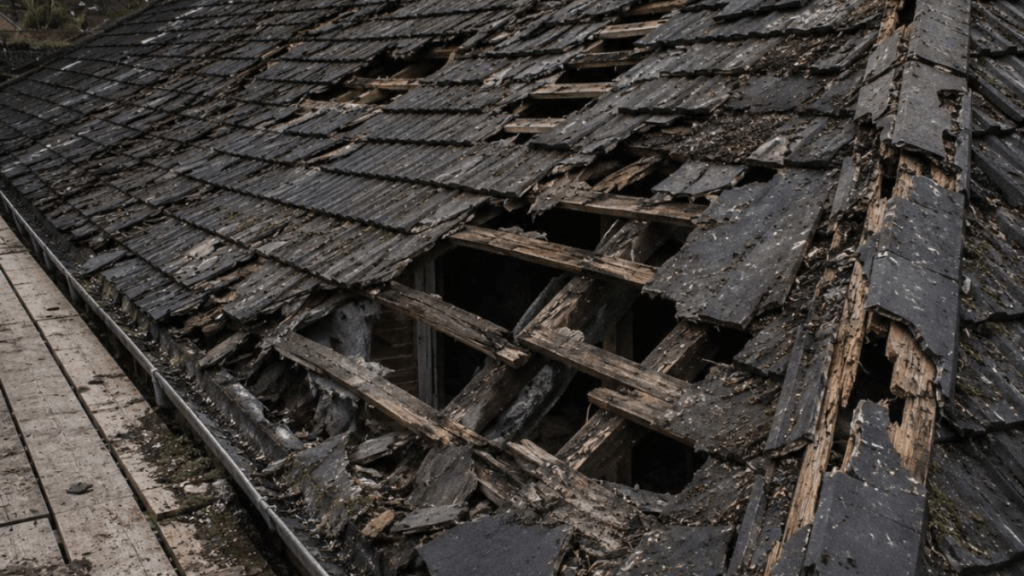
Roof tiles form the outer layer protecting against rain, wind, and everything else the weather throws at a building. Each tile overlaps the next, directing rainwater safely down into the guttering. The moment a tile’s damaged or knocked out of place, that protective barrier breaks, and moisture reaches the roof structure underneath.
Strong wind is one of the biggest causes of missing tiles across the UK. Severe storms can lift tiles clean off their fixings, and repeated freezing weather gradually wears older materials down. Natural ageing plays a role too, especially on roofs that haven’t had much regular maintenance.
One missing tile might look insignificant from ground level, yet it can leave underlay, battens, and roof timbers exposed to constant rainfall. Water getting through one small gap often spreads beneath the surrounding tiles before it ever reaches the loft, which is exactly why tracking the source can be tricky.
Heavy rain can turn a minor defect into widespread water damage surprisingly fast. Loft insulation soaks up moisture, timber starts to deteriorate, and mould can take hold if nothing’s done. Internal ceilings often only show damage once water’s been getting in for a while already.
Regular checks from ground level help catch obvious damage before it becomes a bigger repair. Climbing onto a roof to investigate a missing tile isn’t a good idea, since working at height carries real risk. Professional roofers have the equipment and know-how to inspect safely and replace damaged tiles properly.
Sorting it quickly restores the roof’s weather resistance and cuts the odds of more extensive structural damage. Swapping out one or two tiles almost always costs far less than repairing water-damaged ceilings, insulation, and timber
Why Damaged Roof Tiles Cause Leaks
Tiles work together as a continuous waterproof surface. Missing, cracked, or slipped tiles leave gaps where rainwater can get in and slowly damage the structure below.
| Roof Tile Issue | Possible Result |
|---|---|
| Missing tile | Rain enters roof |
| Cracked tile | Water penetration |
| Loose tile | Storm damage |
| Slipped tile | Internal leaks |
2. Damaged Flashing Around Chimneys, Valleys and Roof Windows
Flashing protects the joints where different parts of the roof meet each other. Lead’s the go-to material for the job, since it holds up well against changing weather while forming a flexible waterproof seal around chimneys, roof windows, valleys, and wall junctions.
Weather wears flashing down gradually over time. Daily expansion and contraction from shifting temperatures can crack it or loosen the fixings. Strong wind can lift flashing right off the roof surface, and poor installation tends to lead to early failure regardless.
Chimneys are especially vulnerable, since several sections of flashing work together to steer water away from the brickwork. Even a small split in the lead lets rainwater travel behind the flashing and into the roof structure.
Roof windows depend on correctly fitted flashing too. Failed seals around these openings often let water in during wind-driven rain. Similar issues crop up around roof valleys, where large volumes of water pass through during heavy downpours.
Signs of flashing damage include loose lead, gaps between the flashing and brickwork, staining around chimney breasts, or damp patches near roof windows. Water getting in through damaged flashing rarely stays localised, which is exactly why a proper diagnosis matters.
Modern flashing repairs might mean replacing damaged lead, resealing joints, or fitting entirely new flashing where things have deteriorated badly. Good workmanship is essential here, since poorly fitted flashing tends to cause the same leak over and over.
Why Flashing Fails
Ageing materials, poor installation, and constant movement from shifting temperatures all play a part in flashing failure. Regular inspections catch loose sections before water ever reaches the roof structure.
| Flashing Location | Common Problem |
|---|---|
| Chimney | Lead splitting |
| Roof valley | Water ingress |
| Roof window | Failed seals |
| Wall junction | Loose flashing |
3. Blocked or Damaged Gutters
Gutters quietly protect a property by carrying rainwater safely away from the roof and the foundations. Once they’re blocked or damaged, water can’t drain the way it should. Overflowing rainwater often backs up beneath the tiles, creating leaks that plenty of homeowners mistake for a problem with the roof covering itself.
Leaves, moss, twigs, and general roofing debris build up in gutters throughout the year, with autumn usually bringing the worst of it. Heavy storms can fill a gutter with broken tiles and branches at any time, though. Regular cleaning keeps drainage working and takes unnecessary strain off the guttering.
Damaged brackets or cracked sections create extra problems too. Water escaping through broken joints can soak external walls, encourage damp inside the property, and weaken brickwork over time. Persistent overflow also raises the odds of moisture reaching fascia boards and roof timbers.
Downpipes need attention too, since a blockage there stops water leaving the gutter system altogether. During heavy rain, trapped water quickly overflows and can end up reaching vulnerable parts of the roof.
Simple gutter cleaning worcester homeowners schedule twice a year cuts the risk of gutter-related leaks significantly. A professional inspection also picks up on damaged fixings, poor alignment, and hidden defects you’d never spot from the ground.
Clean, well-maintained gutters do a lot more than protect the roof. Good drainage helps preserve walls, foundations, soffits, and fascias, and it keeps the whole property safer from expensive moisture-related repairs.
How Blocked Gutters Cause Roof Leaks
Rainwater should move freely through gutters and downpipes. A blockage forces water to overflow or back up under the tiles, which raises the risk of leaks and damp.
| Gutter Problem | Possible Damage |
|---|---|
| Leaves | Overflow |
| Moss | Damp walls |
| Broken gutter | Water damage |
| Blocked downpipe | Roof leaks |
4. Cracked Roof Valleys
Roof valleys are some of the hardest-working parts of any roofing system. Every time it rains, large volumes of water flow through these channels on the way to the guttering. That constant exposure to moving water means valleys tend to wear out faster than the rest of the roof.
Traditional valleys are usually finished with lead, fibreglass, or preformed valley trays. Each option performs well when it’s fitted correctly, though years of weather exposure gradually chip away at how effective it stays. Small cracks, lifting joints, or corrosion can eventually create openings for rainwater to get through.
Debris makes things worse too. Leaves, moss, and twigs often collect where two roof slopes meet, slowing the water flow down. Standing water sits against the valley for longer, which raises the chances of a leak during heavy rain.
Warning signs might include damp patches near the centre of upstairs ceilings, staining around roof intersections, or water in the loft after prolonged rain. Plenty of homeowners assume the leak’s coming from directly above the stain, though water often travels beneath the roof covering before it becomes visible indoors.
Routine inspections catch cracked valley linings before the damage spreads. Replacing worn sections early on is usually far cheaper than repairing rotten timbers, damaged insulation, or internal plasterwork.
Why Roof Valleys Often Leak
Roof valleys handle more rainwater than almost any other part of the roof. Continuous water flow, ageing materials, and trapped debris all gradually raise the risk of leaks. Professional inspections make sure damaged valleys get repaired before moisture spreads into the roof structure.
5. Flat Roof Damage
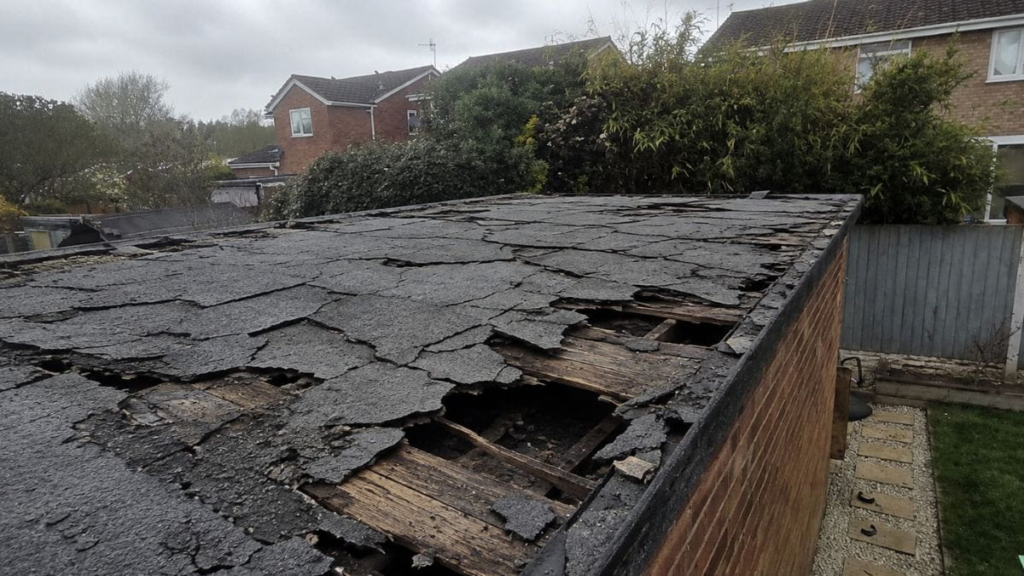
Flat roofs need a different waterproofing approach than pitched roofs. Rather than letting rainwater run off quickly, flat roofing systems rely on carefully designed drainage falls and durable waterproof membranes. Any weak point in that layer can let moisture through.
Ponding water is one of the most common causes of flat roof leaks. A small patch of standing water might look harmless, but prolonged exposure gradually wears roofing materials down. Older felt roofs are especially vulnerable, since repeated expansion and contraction create cracks and splits over time.
Modern EPDM rubber roofs hold up well, though sharp objects, poor installation, or accidental damage can still puncture them. GRP fibreglass systems resist weather strongly too, yet poor workmanship during fitting sometimes leaves surface defects that let water beneath the waterproof layer.
Poor drainage speeds up wear as well. Blocked outlets stop water leaving the roof efficiently, which piles extra pressure onto joints and seams. Regular cleaning keeps drainage working properly year-round.
Flat roofs deserve regular inspection, since small defects are usually much easier to fix before they turn into widespread water damage. Professional roofers check the membranes, joints, drainage outlets, and edge details before recommending a repair.
Common Flat Roof Leak Causes
Several factors raise the odds of a flat roof leak, particularly where maintenance has slipped.
- Ponding water.
- Cracked felt.
- EPDM damage.
- Membrane failure.
- Poor installation.
| Flat Roof Material | Typical Lifespan |
|---|---|
| Felt | 15 to 25 years |
| EPDM | 25 to 40 years |
| GRP Fibreglass | 25 to 30 years |
6. Chimney Problems
Chimneys take a real battering from the weather year-round, which makes them one of the most common sources of roof leaks. Wind-driven rain, freezing temperatures, and natural movement gradually affect both the brickwork and the surrounding flashing. Small defects tend to build up slowly before they become noticeable inside the house.
Mortar joints between bricks naturally break down over time. Once gaps start appearing, rainwater can get into the chimney structure and travel down into the loft or upper rooms. Cracked brickwork causes similar issues by letting moisture soak deeper into the masonry.
Damaged flashing around the base of the chimney is another frequent cause of leaks. Even when the roof tiles themselves are in good shape, failed flashing lets water bypass the protective roof covering entirely and get into the property.
Missing chimney pots or damaged caps raise the risk of water coming in from above too. Rain falling straight into the chimney can eventually affect the surrounding masonry and internal walls, particularly on older chimneys that haven’t had much upkeep.
A proper chimney inspection checks every component: brickwork, mortar joints, lead flashing, and chimney pots. Repairs done early help preserve both the chimney and the roof around it, cutting the odds of much bigger structural work down the line.
How Damaged Chimneys Allow Water Into Your Home
A few different chimney defects can lead to roof leaks if they’re left untreated.
- Loose mortar.
- Cracked brickwork.
- Damaged flashing.
- Missing chimney pots.
7. Worn Roof Membranes and Underlay
Roof tiles are the first layer of protection, but there’s another important barrier sitting beneath them. Roof membranes and underlay stop wind-driven rain reaching the roof structure if water does make it past the outer covering. These materials keep loft spaces dry, which matters more than most people realise.
Age wears their effectiveness down over time. Older roofing felt can turn brittle after decades of temperature swings, while prolonged moisture exposure weakens plenty of traditional underlay materials too. Small tears often go unnoticed since they’re hidden beneath the tiles.
Previous repairs and storm damage can affect the membrane too. Missing tiles expose the underlay to sunlight, which speeds up deterioration through UV exposure. Once that protective layer starts to fail, water reaches battens, rafters, and insulation far more easily than before.
Homeowners rarely find membrane problems until tiles come off during repairs or a replacement. Leaks that keep happening despite seemingly sound tiles usually point to deterioration hiding beneath the visible roof covering.
A professional survey helps a contractor work out whether localised repairs will do, or whether larger sections of underlay need replacing. Quality roof repairs worcester specialists carry out at this stage protect the roof’s structural integrity and stretch out its overall lifespan.
Why Ageing Roof Underlay Eventually Fails
Roof membranes wear down through natural ageing, repeated moisture exposure, and years of shifting weather. Regular inspections catch hidden defects before they turn into serious water damage.
8. Condensation in the Loft
Moisture in a loft doesn’t always mean the roof’s leaking. Condensation causes very similar symptoms, which makes it genuinely tricky for homeowners to work out what’s actually going on. Understanding the difference matters, since it stops unnecessary work getting recommended.
Condensation forms when warm, moisture-laden air from the home rises into a cold loft. Everyday things like cooking, showering, and drying clothes indoors push humidity levels up. Poor loft ventilation traps that warm air, letting water droplets settle on roof timbers, underlay, and insulation.
A genuine roof leak behaves differently. Rainwater usually shows up after heavy rain, creating isolated damp patches or dripping from one specific spot. Condensation tends to be more obvious on cold mornings, spreading across large areas rather than sitting in just one place.
Wet insulation needs sorting either way, regardless of the cause. Damp insulation loses much of its thermal performance, making the property less energy efficient and pushing heating bills up. Ongoing moisture exposure also invites mould and timber decay.
A professional inspection works out whether the moisture’s coming from outside or building up internally through poor ventilation. Getting the diagnosis right avoids unnecessary roof repairs while making sure ventilation problems get fixed before they cause long-term damage.
Roof Leak or Condensation?
A few signs help tell a roof leak apart from condensation, though a professional assessment remains the most reliable way to know for sure.
| Symptom | Roof Leak | Condensation |
|---|---|---|
| Dripping after rain | ✔ | ✘ |
| Water on cold mornings | ✘ | ✔ |
| Damp insulation | ✔ | ✔ |
| Mould growth | ✔ | ✔ |
What Should You Do If Your Roof Starts Leaking?
Finding water coming into your home is worrying, no doubt, but acting quickly helps limit the damage while you wait on a professional repair. A few simple steps in the first few hours often save ceilings, flooring, and belongings from further harm.
Move furniture, electrical equipment, and anything valuable away from the affected area wherever you can. Put a bucket or a suitable container under the leak to catch the dripping water and protect the flooring. Towels or waterproof sheets can help protect nearby surfaces until repairs get underway too.
Don’t climb onto the roof, especially in wet or windy weather. Slippery roofing materials are a real safety hazard, and hidden structural damage might make the roof unstable without you realising. Temporary fixes attempted without the right equipment often make the original problem worse.
Photos come in handy if you end up needing to make an insurance claim. Capture water stains, damaged ceilings, affected belongings, and any visible external damage you can safely photograph from ground level.
Get a professional inspection booked as soon as you can. Experienced roofers can pinpoint the source of the leak, assess how bad the damage actually is, and recommend the right repair before things get any worse.
Immediate Steps to Reduce Damage
- Protect furniture and valuable belongings.
- Catch dripping water using buckets or containers.
- Avoid climbing onto the roof.
- Photograph visible damage for insurance records.
- Arrange a professional roof inspection promptly.
Can You Repair a Roof Leak Yourself?
Some minor upkeep around the home can help reduce the odds of a roof leak, though most actual repairs really need a qualified professional. Safety’s the main concern here, since working at height without the right equipment carries genuine risk.
Simple tasks like clearing leaves out of gutters, removing moss from drainage channels, or checking for obvious blockages might suit a homeowner, provided it’s done safely from ground level or with proper access equipment.
Repairs involving tiles, flashing, or structural components need specialist knowledge, though. Fit a tile incorrectly, and you can open the door to more water getting in. Poorly fitted flashing tends to cause the same leak again and again, often staying hidden until internal damage shows up.
Flat roofs need professional expertise too, since waterproof membranes require specific fitting techniques. Chimney repairs, valley repairs, and any structural roof work should always go to an experienced contractor using the right materials and proper installation methods.
Professional repairs don’t just solve the immediate problem either. They catch hidden damage that might otherwise go unnoticed. Good workmanship stretches out the roof’s lifespan and cuts down on repeat repairs.
Suitable DIY Tasks
- Clearing gutters.
- Removing leaves and roof debris.
- Checking visible roof areas from ground level.
Repairs Best Left to Professionals
- Roof tile replacement.
- Flashing repairs.
- Flat roof repairs.
- Chimney repairs.
- Structural roof repairs.
How Much Does Roof Leak Repair Cost in the UK?
Most roof leak repairs in the UK cost between £100 and £1,200, depending on where the leak is, what’s causing it, and how much work is needed to fix it properly.
Repair costs shift depending on where the leak is, what the roof’s made of, how accessible it is, and how bad the damage’s gotten. Small repairs caught early are usually far more affordable than the extensive structural work that follows prolonged water ingress.
Replacing a few damaged tiles generally costs less than fixing a failed roof valley or replacing large chunks of flat roofing. Labour rates, scaffolding needs, and how tall the property is all factor into the final quote too.
Getting several written estimates lets homeowners compare prices while understanding exactly what each contractor’s actually including. A proper quotation should clearly break down labour, materials, waste removal, and any guarantee that comes with the work.
A professional inspection remains the best way to work out the true scope of repairs before anything starts.
| Repair Type | Typical UK Cost |
|---|---|
| Replace roof tile | £100 to £250 |
| Flashing repair | £250 to £600 |
| Gutter repair | £100 to £350 |
| Roof valley repair | £400 to £900 |
| Flat roof repair | £300 to £1,200 |
Note: Costs vary depending on roof size, accessibility, and the extent of the damage.
How KC Roofing Services Can Help
A leaking roof needs fast attention from people who genuinely understand how different roofing systems hold up over time. KC Roofing Services provides reliable roofing solutions for homeowners across Worcester, Worcestershire, and the surrounding areas, helping protect properties from further water damage while delivering repairs that actually last.
Repairs cover a wide range of problems, including slipped tiles, damaged flashing, leaking roof valleys, and storm-related damage. Every job starts with a proper inspection to find the actual source of the leak rather than just treating what’s visible.
Emergency roofing services are available too, for whenever severe weather or unexpected damage leaves a property exposed. Fast response times help limit water getting in and cut the risk of further structural damage.
Flat roofing repairs are completed with quality materials built for durable weather protection. Whether the roof’s finished in felt, EPDM, or GRP fibreglass, every repair uses suitable methods and proven installation techniques.
Properties needing a complete roof replacement can benefit from professional new roof installations too. Every project’s tailored to the property’s design, aiming for dependable performance and stronger weather resistance.
Chimney repairs, gutter repairs worcester properties often need, and professional roof inspections round out the service. Honest advice, quality workmanship, and free quotations help homeowners make informed decisions without any pressure attached.
Whether you’ve found a small leak or need urgent roofing help, KC Roofing Services offers dependable solutions that keep your home safe, dry, and protected all year round.
KC Roofing Services provides a free roofing quote with no hidden charges and no obligation, so you always know exactly what you’re paying for before any work begins. Free quotes are available 24/7, making it easy to get in touch and arrange an inspection at a time that suits you.
Free quotations are available to homeowners and businesses across Worcestershire, Worcester, Malvern, Pershore, Evesham, Bromsgrove, Kidderminster, Stourport-on-Severn, Bewdley, Redditch, Birmingham, Solihull, Sutton Coldfield, Smethwick, West Bromwich, Halesowen, Dudley, Oldbury, Walsall, and Tipton.
Frequently Asked Questions
Why is my roof leaking during heavy rain?
Heavy rain exposes damaged tiles, faulty flashing, blocked gutters, or worn roofing materials that let water get inside.
Can a small roof leak become a serious problem?
Yes, Small leaks often lead to damp, mould, timber decay, and expensive structural repairs if they’re left alone.
How much does roof leak repair cost in the UK?
Most repairs cost between £100 and £1,200, depending on the damage and the type of repair needed.
Should I replace my roof if it keeps leaking?
Repeated leaks usually point to widespread deterioration. A professional inspection determines whether repair or replacement makes more sense.
How quickly should a leaking roof be repaired?
As soon as possible. Acting early cuts down on water damage, keeps repair costs lower, and protects your property’s structure.
Final Thoughts
Roof leaks rarely go away on their own without professional attention. Damaged tiles, failed flashing, blocked gutters, cracked valleys, ageing membranes, chimney defects, and poor roof maintenance remain the most common reasons water gets into a property. Spotting the warning signs early gives homeowners the best shot at avoiding major structural damage and a costly repair bill.
Regular inspections play a real role in protecting your home. Small roofing problems are usually straightforward to fix when they’re caught early, while delayed action tends to lead to damp, mould, timber decay, and insulation damage that costs far more to put right.
Homeowners across Worcester, Worcestershire, and the surrounding areas who spot water stains, missing tiles, or any other signs of a leaking roof should book a professional inspection without delay. KC Roofing Services offers expert advice, quality workmanship, and reliable roofing solutions to help keep your property weatherproof through every season.