Typically, a standard residential roof replacement takes around 3 to 7 working days, although the exact timeframe depends on the property and the work involved.
Replacing a roof is a major home improvement project, so knowing how long the work may take helps homeowners plan around noise, scaffolding, deliveries and temporary disruption. A reroof can affect access around the property and may leave the outside of the house looking like a building site for several days.
Every roofing project follows a slightly different schedule. Roof size, pitch, chosen material, access, weather and the condition of the existing roof can all influence the duration. Hidden problems beneath old tiles can also add time once the existing covering has been removed.
Checkatrade gives 3 to 7 working days as a typical timeframe for a standard pitched roof on a semi-detached house, while smaller flat roofs may take around 2 to 4 days. Larger properties or more complicated roof designs can take considerably longer.
These figures should be treated as useful planning guidance rather than a guaranteed completion date. A reliable roofing contractor can provide a more accurate estimate after inspecting the roof and assessing the work required.
How Long Does a Roof Replacement Take in the UK?
Most standard residential jobs land somewhere in that 3 to 7 day window, though a small terrace can sometimes be finished quicker, and a sprawling detached house with a complicated roofline can easily run past two weeks.
| Property or Roof Type | Typical Replacement Time |
|---|---|
| Small terraced house | 2 to 4 working days |
| Standard semi-detached house | 3 to 7 working days |
| Large detached house | 5 to 10 working days |
| Complex roof (valleys, dormers) | 7 to 14+ working days |
| Small flat roof | 2 to 4 working days |
| Large or complex flat roof | 1 to 2+ weeks |
These are planning estimates, and they move depending on the property in front of you. A simple roof shape with easy access and sound timber underneath can move fast. Add a few extra roof slopes, a couple of chimneys, some roof windows, or a tricky access route, and suddenly there’s a lot more prep and fiddly detail work involved before a single tile goes back on.
Weather is the wildcard nobody can fully plan around. Some materials simply won’t install correctly, or safely, in the wrong conditions, so heavy rain or strong wind can force a pause partway through.
Then there’s what’s underneath. Stripping off the old covering is often the first time anyone gets a proper look at the timber structure, and rot or movement in the rafters isn’t always something a ground-level survey picks up. That’s usually where an “it’ll be done by Thursday” estimate quietly slips.
Regulatory bits matter too, even if they rarely make headlines. In England, re-covering a roof can fall under Building Regulations if the scope is substantial or structural work is involved. The Planning Portal covers when approval kicks in. And on the trades side, GOV.UK lists schemes like CompetentRoofer and NAPIT as authorised for replacement roof coverings on both pitched and flat roofs.
What Does a Full Roof Replacement Involve?
People often picture a reroof as “old tiles off, new tiles on,” but there’s a lot more going on in between, which is exactly why it takes days rather than hours.
1. Scaffolding and Site Preparation
Nothing serious happens until access is sorted. Scaffolding goes up first on nearly every full residential reroof, because roofers need somewhere safe to stand and work.
Behind the scenes, this stage is also when material deliveries get timed, a skip or waste route gets sorted, and vulnerable areas around the property (patios, plants, that one car you really don’t want dusted in mortar) get covered or moved. It sounds like admin, but a poorly planned start can slow everything that follows. If you’ve got a narrow driveway, shared access with neighbours, or anything unusual about getting to your property, raise it with the contractor before day one.
2. Removing the Existing Roof Covering
Off it all comes: tiles or slates, ridge pieces, old mortar, flashing, and often the battens and membrane underneath if they’re past reuse.
This stage generates a genuinely surprising amount of waste, which is exactly why waste disposal needs agreeing beforehand rather than being sorted out on the fly. It’s also the point where the roof’s real condition stops being a guess.
On a simple roof, stripping can move quickly. On a big house, or one with several layers of old roofing built up over the years, it takes longer. No way around that.
3. Inspecting the Roof Structure
With the covering gone, the roofers can finally see the rafters, battens, and any roof deck properly. This is where rot, damp, insect damage, cracking, or movement gets spotted- problems that simply weren’t visible from a ladder during the original quote.
Minor issues rarely blow up the schedule. Swapping out a handful of damaged battens usually just folds into the normal install. Widespread timber decay is a different story: several compromised rafters, or signs the structure has actually shifted, can mean extra labour and, depending on severity, a proper structural assessment before work continues.
4. Installing the New Roofing System
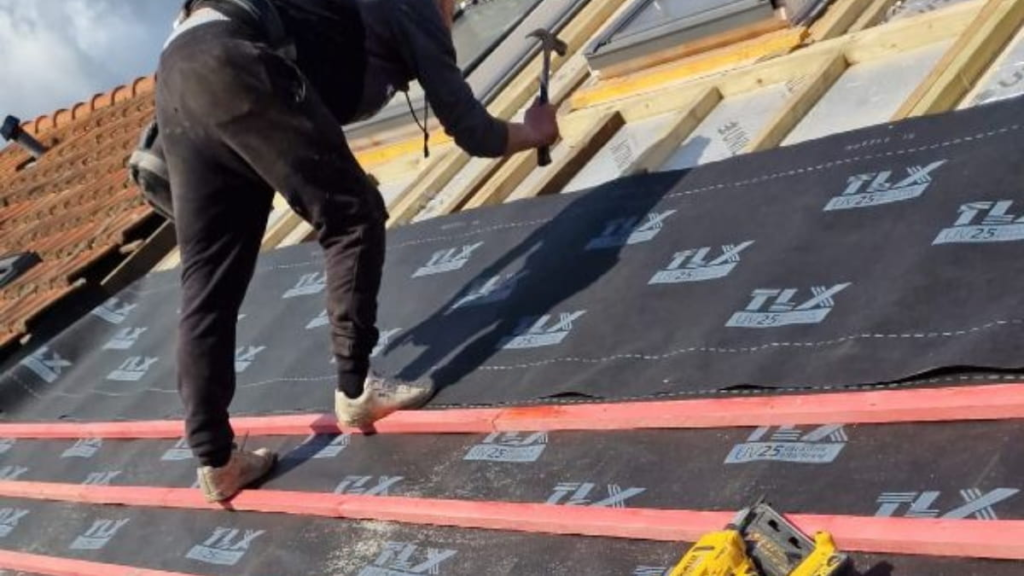
This stage is where the chosen roofing material starts to influence the installation time. Concrete tiles, natural slate and flat roofing systems each have different fitting requirements and working speeds.
A typical pitched roof receives a breathable membrane before treated timber battens are installed. Roofers then fit the selected tiles or slates according to the manufacturer’s specifications. Ridge tiles, valleys, flashing and ventilation components are completed as the installation progresses.
Proper roof ventilation plays an important role in managing moisture within the loft space. Good airflow can help reduce condensation and protect the roof structure over time. Insulation upgrades can also be completed during the project, although they should be included separately when planning the overall schedule.
Complex roof features usually require additional time and attention. Chimneys, dormers, roof windows, valleys and changes in roof pitch all need precise fitting and effective waterproof detailing.
Homeowners considering new roofs worcester should choose an experienced roofing contractor who can manage each stage carefully and maintain the required installation standards.
Rough installation pace by material:
- Concrete tiles: faster.
- Interlocking clay tiles: moderate.
- Plain clay tiles: slower, more individual pieces.
- Fibre cement slate: moderate.
- Natural slate: slower, each slate positioned and fixed individually.
- EPDM flat roofing: often quick on smaller areas.
- GRP/fibreglass: moderate.
- Felt flat roofing: depends heavily on roof size and system used.
A decent contractor will walk you through why one material takes longer than another before work starts, rather than leaving you to wonder why the neighbour’s concrete tile reroof finished in half the time.
5. Finishing and Final Inspection
The last stretch is more than clipping the final tiles into place. Ridges, valleys, and flashing all need finishing properly, since these are the details that actually keep rain and wind out over the years. Fascias, soffits, guttering, and roof windows may get checked or swapped if they’re part of the agreed scope, and the roofline gets a once-over for straight lines and secure fittings.
Site waste (old tiles, timber offcuts, packaging) should be cleared as part of this stage, not left for you to deal with. A final inspection by the contractor closes things out before handover. Worth asking upfront: does a workmanship guarantee come with the job, and what paperwork will you actually get at the end?
Can You Stay at Home During a Roof Replacement?
Generally, yes. Roofing work happens almost entirely outside, so moving out for a standard reroof isn’t usually necessary.
Noise is the main thing you’ll notice: stripping old tiles, cutting materials, hammering in battens, and you may well feel the vibration through the house, particularly upstairs. Access around the property can get restricted too, since driveways and paths sometimes need to stay clear for the crew and their materials.
Keep kids and pets away from scaffolding, stored materials, and any waste piles. Loose debris can and does fall during stripping, so the work area isn’t somewhere for unsupervised wandering. If you work from home, it’s worth having a frank conversation with the contractor about working hours before the job starts, especially if you’ve got calls to take.
There are exceptions, of course. Vulnerable occupants, major structural work, or an unusual access setup can change the picture, so it’s worth flagging anything specific to your situation early on.
Will My Home Be Protected From Rain During the Roof Replacement?
Good contractors plan for weather before a single tile comes off. Leaving a roof needlessly exposed is a rookie mistake, so experienced crews sequence the work to minimise how long any section stays open.
Temporary weather protection, sheeting mainly, gets used where sensible, particularly if rain looks likely mid-project. Forecasts genuinely influence day-to-day scheduling too: heavy rain and strong wind can make roofing unsafe, or stop certain materials from installing correctly at all.
One question worth asking before you sign anything: how will you protect my house if the weather turns while the roof is open? A confident, specific answer, covering, monitoring, and contingency plans, tells you a lot about how the company actually operates. No roofer controls the weather, and a short weather delay beats a rushed job every time.
What Happens If Rotten Roof Timbers Are Found?
It happens more often than people expect, especially on roofs that have leaked on and off for years without anyone fully sorting the cause.
Not every bit of damaged timber means a major job. Small patches of decay often just mean swapping a few battens or doing a localised repair. Serious deterioration involving the rafters themselves is a bigger deal, and may need addressing before the new covering can go on safely.
Water is usually the culprit. A slow leak keeps timber damp long enough for decay to set in, and poor loft ventilation doesn’t help. Older properties sometimes carry the legacy of a leak that was patched years ago but never properly resolved. Insect damage is the other one to watch for: cracking, soft or spongy wood, odd little holes, worth flagging rather than covering back over.
Structural movement is the one that needs the most care. If rafters have actually shifted, the contractor needs to understand why before deciding how to fix it properly.
Common signs of roof timber damage:
- Rot.
- Damp.
- Insect damage.
- Cracking.
- Structural movement.
| Problem | Likely Effect on the Timeline |
|---|---|
| Small batten repairs | Minor, barely noticeable |
| Several damaged rafters | Adds real time |
| Extensive timber decay | Can cause a significant delay |
| Structural alterations | May need assessment and extra approvals |
Problem Likely Effect on the Timeline Small batten repairs Minor, barely noticeable Several damaged rafters Adds real time Extensive timber decay Can cause a significant delay Structural alterations May need assessment and extra approvals
A good contractor tells you about this stuff before diving into unplanned extra work, ideally with photos, since most homeowners aren’t climbing up to look for themselves. Depending on scale, Building Regulations can come into play for structural repairs, so it’s worth asking directly whether extra approval or certification applies to your job.
How to Prepare Home for a Roof Replacement
You don’t need to strip the house bare before the roofers turn up, but a bit of prep genuinely smooths things out.
Roof replacement preparation checklist:
- Clear the loft where you can.
- Cover or move anything fragile (dust and vibration reach further than you’d think).
- Move cars away from the work area.
- Tie down or store outdoor furniture and pots.
- Keep kids away from scaffolding.
- Keep pets away from the work area entirely.
- Talk through access with the contractor beforehand.
- Confirm how and when materials will be delivered.
- Ask how waste gets taken away.
- Pin down the expected start and finish dates.
The loft is easy to forget about but worth the effort. Dust and small debris drift down during stripping and installation, so covering stored boxes, or moving them out for the week, saves a much bigger cleanup later.
Cars and outdoor items matter more than people assume too. Scaffolding, waste bins, and stacks of materials all need room around the house, and strong wind combined with loose garden furniture and building materials is a genuinely avoidable hazard. A quick conversation about arrival times, deliveries, and the rough schedule before day one heads off most of the misunderstandings that otherwise crop up mid-project.
How Do You Know When Your Roof Needs Replacing?
A leak on its own doesn’t automatically mean full replacement. Plenty of problems are fixable in isolation. Replacement becomes the sensible option once several parts of the system are wearing out at the same time.
Persistent Roof Leaks
- Leaks that keep coming back, especially in different spots, often point to the covering or waterproofing layer reaching the end of its life, not just one bad patch.
Widespread Tile or Slate Damage
- A couple of cracked tiles is a repair job. Dozens of slipped or deteriorated ones across the roof are a different conversation.
Sagging Roof Areas
- Visible dips usually mean weakened rafters or rotten timber underneath. Get it looked at properly rather than assuming it’s cosmetic.
Extensive Timber Damage
- Replacing the covering without fixing decayed structure underneath just means doing the job again sooner than you’d like.
Ageing Roofing System
- How old the roof is matters, but so does how it’s been maintained and what it’s made of.
Repeated Repairs
- If you’re calling the roofer back every year for the same roof, it’s worth asking whether replacement would actually work out cheaper over time.
Roof Replacement vs Roof Repair: Which Do You Need?
| Situation | Likely Path |
|---|---|
| One or two broken tiles | Repair |
| Isolated flashing failure | Repair |
| Small, contained leak | Repair or inspection |
| Widespread tile deterioration | Consider replacement |
| Major structural deterioration | Needs professional assessment |
| Repeated major leaks | Replacement worth considering |
| Roof near end of its service life | Replacement assessment |
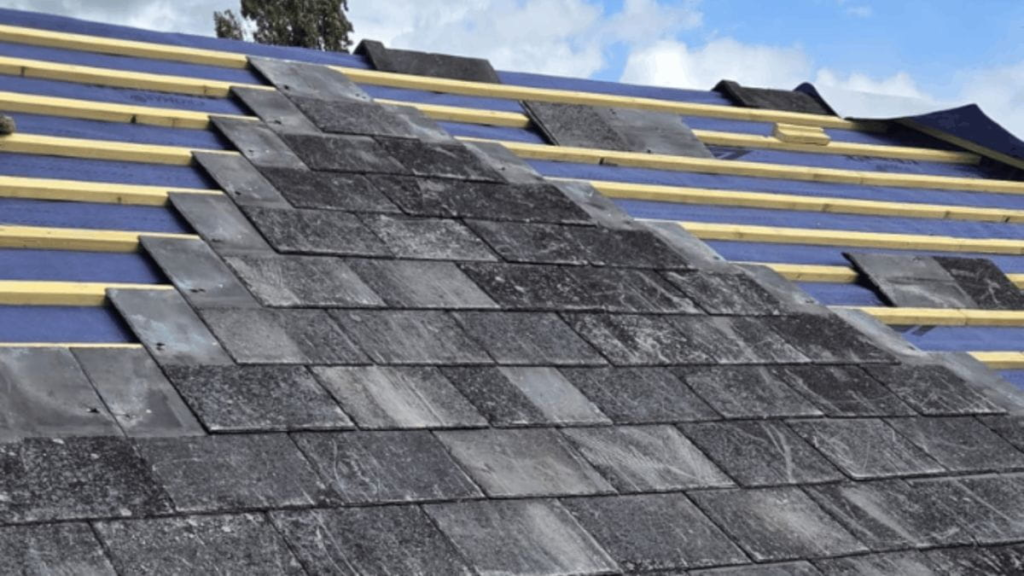
Repair is usually the sensible choice when the damage is contained and most of the roof remains in good condition. Paying for a complete reroof would rarely make sense when the problem is limited to one damaged section or a small area of flashing. Professional roof repairs worcester can often resolve these isolated issues before they develop into more expensive problems.
Replacement becomes more worthwhile when deterioration is spread across the roof. An ageing system with recurring leaks, widespread tile damage and failing underlay can continue generating repair costs, even after individual faults have been fixed.
Age alone should not determine the decision. A well-maintained older slate roof may still have many useful years remaining, while a poorly installed newer roof can develop serious defects much sooner. A professional roof survey provides a clearer picture of the roof’s condition and helps separate necessary work from optional improvements.
What Can Delay a Roof Replacement?
Even well-planned jobs can run over, usually for reasons that only become clear once work is actually underway.
Weather Conditions
Rain, wind, and ice can all make roofing unsafe or stop certain materials curing or fitting properly. A contractor who’s willing to pause rather than push through bad conditions is doing you a favour, even if it doesn’t feel like it at the time.
Hidden Structural Problems
Rotten rafters, damp timber, movement- these often only surface once the old covering is off. Small fixes barely register on the schedule; extensive timber replacement can add several days.
Complex Roof Designs
Complicated roof designs take longer to strip and recover than a simple pitched roof, because every valley, dormer, chimney, and roof window needs its own cutting, flashing, and waterproofing.
Difficult Access
Difficult access slows deliveries, scaffolding, and waste removal. Terraces with narrow side passages or houses where materials can’t sit close to the building all need extra planning.
Material Availability
Material availability matters more than people expect. Bespoke colours or less common products, certain natural slates, for instance, sometimes need ordering well in advance.
Additional Roofline Work
Fascias, soffits, guttering, and downpipes can extend the project, though doing it while the scaffolding’s already up often makes more sense than a separate job later.
How to Choose a Roofing Contractor for Your Project
The company you choose shapes both the finished quality and how smoothly the whole thing runs. Price matters, obviously, but it shouldn’t be the only thing on the scorecard.
Get a written quote that actually spells out the roofing system, labour, scaffolding, waste removal, and anything else involved. A vague one-liner makes comparing quotes nearly impossible and leaves the door open for surprise charges later.
Experience with your specific material counts for a lot. Natural slate, clay tiles, concrete tiles, and flat roofing all have their own fixing quirks and common failure points, and a contractor who works with your chosen material regularly will know them.
Check insurance too, public liability cover at minimum, plus anything else relevant to the scope of work. Reviews are useful background but shouldn’t carry the whole decision on their own; ask about previous projects, workmanship guarantees, and how they’d actually approach your roof.
Local knowledge helps as well. A roofer working regularly around Worcester and Worcestershire will have a feel for the local housing stock, typical weather patterns, and the roofing styles common in the area.
Frequently Asked Questions
How long does a roof replacement take in the UK?
Most standard residential jobs take 3 to 7 working days. Larger or more complicated roofs can run considerably longer.
Can I stay at home during a roof replacement?
Usually, yes, but expect noise, vibration, and some temporary restrictions on access.
What can delay a roof replacement?
Bad weather, difficult access, complicated roof designs, material availability, and unexpected structural damage are the usual suspects.
Will my home be protected from rain during the work?
A good contractor plans around this and may use temporary weather protection to keep water out while sections are open.
Should I repair my roof or replace it?
Small, isolated problems are usually repairable. Widespread deterioration, recurring leaks, or major structural damage tend to point toward replacement.
Final Thoughts
There’s no universal number for how long a reroof takes, but 3 to 7 working days is a reasonable planning benchmark for a standard residential property, with larger homes, complicated rooflines, and structural repairs pushing well past that.
Material choice moves the timeline too. Concrete interlocking tiles generally go up fastest, natural slate and intricate roof shapes take longer, and flat roofs vary depending on size and system.
Weather remains the biggest unknown. A contractor who’s willing to pause rather than rush in unsafe conditions is doing the job properly, even when it costs a day or two, and temporary weather protection helps keep your home safe in the meantime.
You can make your own life easier by clearing the loft, protecting anything fragile, keeping cars clear of the work area, and having a proper conversation about access before the crew arrives. Beyond that, clear communication with your contractor about start dates, expected completion,